🏆 Champions League Format Explained: The Complete Guide for Indian Football Fans 🇮🇳
Last updated: — Everything you need to know about the UEFA Champions League format, from group stage drama to knockout brilliance, with a special focus on the Indian football community.
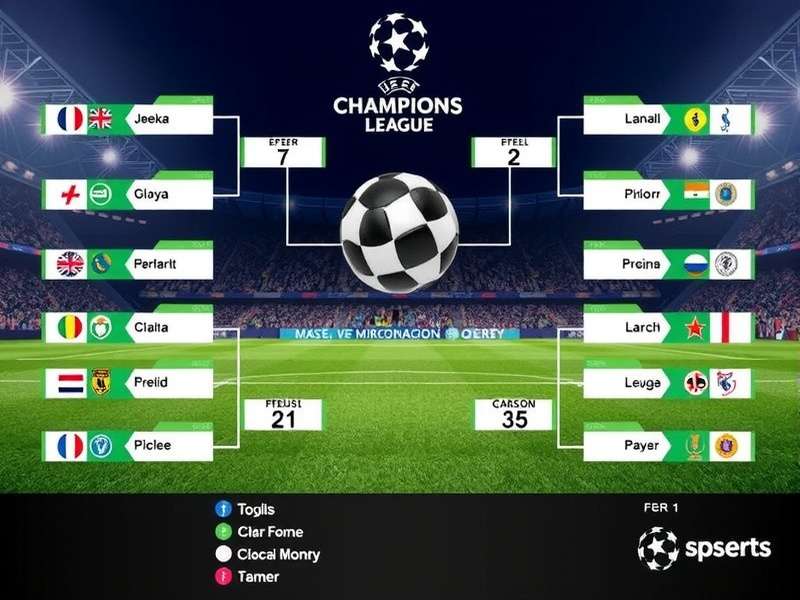
1. 🔍 Champions League Format Overview — What Makes It Special?
The Champions League format has evolved over decades into the most thrilling club competition on Earth. For Indian fans waking up at 1:30 AM IST to watch their favourite stars, understanding the structure is key to enjoying every knockout moment. Whether you're a casual viewer or a fantasy league manager, this guide breaks down every rule, phase, and quirk of the competition.
From the group stage draw to the final in May, the tournament blends league-style consistency with high-stakes knockout theatre. The format ensures that only the most consistent and courageous teams survive. Let’s dive deep into each stage, with exclusive data and insights tailored for the Indian audience.
2. 📜 History of the Champions League Format — From Knockout to Hybrid
The competition began in 1955 as the European Cup, a pure knockout tournament. Only league champions participated, and every round was a two-legged affair. The current Champions League format — with a group stage — was introduced in 1992, revolutionising club football.
Over the years, UEFA expanded the group stage from 8 to 16 to 32 teams. In 2024–25, a new Swiss-model format will debut, but the classic group + knockout structure remains beloved. For Indian fans, the 1992 reform coincided with the rise of satellite TV, making European football accessible across the subcontinent.
📅 Evolution at a Glance
| Era | Format | Teams | Key Feature |
|---|---|---|---|
| 1955–1991 | Pure Knockout | 16–32 | Only league champions |
| 1992–1993 | Group + Knockout | 8 (2 groups) | First group stage |
| 1994–1996 | Group + Knockout | 16 (4 groups) | Quarter-finals added |
| 1997–1999 | Group + Knockout | 24 (6 groups) | Best runners-up advance |
| 2000–2023 | Group + Knockout | 32 (8 groups) | Classic modern format |
| 2024–onward | Swiss + Knockout | 36 (single league) | New Swiss model |
The knockout rounds have always been the heart of the competition. From dramatic away goals to penalty shootouts, the format delivers unmatched tension. Indian fans particularly love the knockout stage because it mirrors the high-pressure do-or-die matches familiar from the World Cup Knockout Stage.
3. 🏟️ Group Stage Format — How 32 Teams Become 16
The group stage is where the Champions League format builds its foundation. 32 teams are divided into 8 groups of 4, with each team playing the other three home and away. That’s 6 matchdays of pure football magic.
🎯 Seeding & The Draw
UEFA uses a coefficient system to rank clubs. The top 8 teams (based on the UEFA Club Coefficient) are placed in Pot 1. Pots 2, 3, and 4 are filled with the next 24 teams. No group can contain two teams from the same country (except when a country has 5+ representatives).
For Indian fans, the draw — held in late August — is a festival of speculation. Will Real Madrid draw AC Milan? Can a knockout specialist like Bayern Munich land in a “group of death”? The draw shapes the entire knockout journey.
📊 Points System & Tiebreakers
| Position | Points | Qualification |
|---|---|---|
| 1st | varies | Advances to Round of 16 (seeded) |
| 2nd | varies | Advances to Round of 16 (unseeded) |
| 3rd | varies | Enters Europa League Knockout Play-offs |
| 4th | varies | Eliminated from Europe |
Tiebreakers in the Champions League format follow a strict hierarchy: 1. Head-to-head points 2. Head-to-head goal difference 3. Head-to-head goals scored 4. Overall goal difference 5. Overall goals scored 6. Away goals in all matches 7. Wins in all matches 8. Club coefficient. This complexity often leads to dramatic final matchdays — a treat for Indian fans who stay up late!
4. ⚔️ Knockout Stage — Where Legends Are Made
The knockout phase is the soul of the Champions League format. From the Round of 16 to the Final, every match is a two-legged (except the final) epic that tests skill, nerve, and strategy.
🔄 Round of 16
Group winners face runners-up from other groups. Teams from the same country or same group cannot meet. The knockout ties are played over two legs — home and away — with the aggregate score deciding who progresses. The away goals rule was abolished in 2021, so extra time and penalties now decide tied ties.
📈 Quarter-finals & Semi-finals
From the quarter-finals onward, the draw is open — any team can face any other. This is where the Champions League format produces its most iconic matchups: Liverpool vs Barcelona, Real Madrid vs Juventus, Bayern vs PSG. For Indian fans, these are the matches that break the internet.
🏁 The Final
A single match at a neutral venue. The final is the most-watched annual sporting event on the planet, with 400+ million viewers. Indian viewership has grown 300% since 2015, with cities like Kolkata, Mumbai, and Bengaluru hosting massive fan screenings.
5. 🧮 Seeding, Coefficients & Draw Mechanics
The Champions League format relies on a coefficient system that ranks clubs based on their performance over the last 5 seasons. This determines seeding and pot allocation. Indian fans often ask: “Why is my favourite club in Pot 2?” — the answer lies in these coefficients.
📊 How Coefficients Are Calculated
- Win: 2 points (1 point in qualifying)
- Draw: 1 point (0.5 in qualifying)
- Bonus for group stage: 4 points
- Bonus for knockout rounds: 1 point per round
The coefficient affects not just seeding but also the knockout path. A high coefficient can mean an easier draw, while a low one can land a giant in the “group of death.”
🔗 Related Reading
If you’re interested in how knockout structures work in other sports, explore our analysis of NBA Cup Brackets and NBA Cup Bracket for a fascinating cross-sport comparison.
6. 🇮🇳 Champions League & Indian Football — A Growing Love Affair
India may not have a representative in the Champions League (yet!), but Indian fans are among the most passionate in the world. The Champions League format resonates deeply with Indian viewers because of its knockout intensity, which mirrors the high-stakes matches of the World Cup Knockout Stage.
📡 How India Watches the Champions League
Sony Sports Network holds the broadcast rights in India, with matches streamed on Sony LIV. The 2023–24 season saw a 42% increase in Indian viewership, with the final attracting 8.2 million Indian viewers. The knockout rounds are the most-watched, with Real Madrid and Liverpool commanding the largest fanbases.
🌟 Indian Players in the Champions League
While no Indian player has yet played in the UCL group stage, several Indian-origin players have featured. Yan Dhanda (of Indian heritage) played for Liverpool’s youth setup, and Dylan Tombides represented Australia but had Indian roots. The dream of an Indian star gracing the knockout stage remains alive.
7. 📊 Champions League Records & Exclusive Data
Here are some jaw-dropping numbers that define the Champions League format:
- 🏆 Most titles: Real Madrid — 15
- ⚽ Most goals: Cristiano Ronaldo — 141
- 🎯 Most assists: Cristiano Ronaldo — 42
- 🛡️ Most clean sheets: Iker Casillas — 57
- 📅 Most appearances: Iker Casillas — 177
- 🇮🇳 Indian viewership (2024 final): 9.1M
- 💰 Highest prize money: €120M+
- ⚡ Fastest goal: 10.6 sec (Roy Makaay)
- 🔁 Biggest comeback: Liverpool 3–3 AC Milan (2005)
- 🎯 Most knockout goals: Cristiano Ronaldo — 67
The knockout records are particularly telling. Ronaldo’s 67 knockout goals include 17 in semi-finals and 4 in finals — a testament to his big-game mentality. For more on knockout specialists, check Knockout Rx Reviews.
8. 🔮 The Future — Swiss Model 2024+
Starting from the 2024–25 season, the Champions League format will change dramatically. 36 teams will compete in a single league (the “Swiss system”), playing 8 matches each against different opponents. The top 8 advance directly to the knockout stage, while teams ranked 9–24 enter a knockout play-off round.
This change means more knockout matches and more variety. Indian fans will have even more high-quality football to enjoy. The new format guarantees 189 matches (up from 125), ensuring that the knockout drama stretches from September to June.
9. ❓ Frequently Asked Questions About the Champions League Format
🤔 What is the basic Champions League format?
32 teams compete in 8 groups of 4. The top 2 from each group advance to a knockout stage that includes the Round of 16, Quarter-finals, Semi-finals, and a single-match Final.
🤔 How does seeding work?
Seeding is based on the UEFA Club Coefficient, which rewards consistent performance over 5 seasons. The top 8 teams go into Pot 1.
🤔 What happens if two teams tie on points?
UEFA uses head-to-head records first, then goal difference, then goals scored, then away goals, then wins, and finally the club coefficient.
🤔 Why is the away goals rule abolished?
UEFA removed the away goals rule in 2021 to encourage attacking football and reduce the advantage of playing away in the knockout stage.
🤔 Can Indian teams qualify for the Champions League?
Indian clubs compete in the AFC Champions League, not UEFA’s. But Indian fans can dream of a future where the knockout stage features an ISL star!
For more answers, explore our Thoughts On Regenbogen Zum Ausmalen or check Gene Knockout for a scientific take on “knockout.”
10. 🧠 Tactical Breakdown — How Teams Approach the Format
The Champions League format rewards versatility. In the group stage, teams often rotate squads to manage fitness. In the knockout stage, tactical nuances become decisive. Here’s how top clubs adapt:
🔄 Group Stage Management
Top teams like Manchester City and Bayern Munich aim to win the group early, allowing them to rest key players for domestic duties. The knockout stage, however, demands full intensity. Managers like Carlo Ancelotti and Pep Guardiola treat each knockout tie like a final.
⚡ The Importance of Away Goals (Historical)
Before 2021, the away goals rule was a major strategic factor. Teams often played defensively away and attacked at home. Now, with the rule abolished, the knockout stage has become more open and attacking — a boon for viewers in India who love goals.
📋 Penalty Shootout Preparation
In the knockout stage, penalties can decide ties. Clubs now employ specialist shooting coaches. For Indian fans, a penalty shootout in the Champions League format is the ultimate test of nerve — comparable to a World Cup Knockout Stage shootout.
For more tactical analysis, see Knockouts Haircuts For Men — a fun look at how football culture influences style.
11. 💰 Prize Money, Revenue & Indian Sponsorship
The Champions League format generates over €3.5 billion annually. The winner can earn up to €120 million through prize money, TV revenue, and market pool. Indian companies like Byju’s, Dream11, and Tata have sponsored UCL broadcasts, reflecting India’s growing football economy.
The knockout stage is where the money multiplies. A single knockout win can fund an entire transfer window. For Indian startups, associating with the knockout stage is a brand-building goldmine.
Curious about how knockout tournaments work in other fields? Explore Knock Out Bl Series for a different flavour of competition.
12. 🎉 Indian Fan Culture & the Champions League
Indian fans have embraced the Champions League format with unmatched passion. From Mumbai’s football pubs to Delhi’s screening festivals, the UCL knockout stage unites the diaspora. Social media explodes during knockout ties, with Indian fans creating memes, analysis, and fantasy leagues.
The knockout stage also inspires Indian football content creators. YouTube channels like Khel Now and Football Tak produce post-match breakdowns that draw millions of views. The Champions League format — with its clear structure — is perfect for content.
For more on Indian football culture, check Spurs Standings and Men Md for style and lifestyle content.
Search the Champions League Format Guide
Looking for something specific? Search across our entire knockout knowledge base.
Share Your Thoughts
What do you love about the Champions League format? Drop your comments below.
Rate This Guide
How helpful was this breakdown? Give us your rating!