🥊 Knockout Punch: The Complete Encyclopedia of Boxing's Ultimate Weapon
From the dusty gyms of Mumbai to the floodlit rings of Las Vegas, the knockout punch remains the most electrifying moment in combat sports. In this 10,000+ word guide — crafted exclusively for Knockout World Cup — we break down the biomechanics, training methods, legendary practitioners, and cultural significance of the KO. Whether you're a boxer, MMA fighter, coach, or die-hard fan, this is your definitive resource.
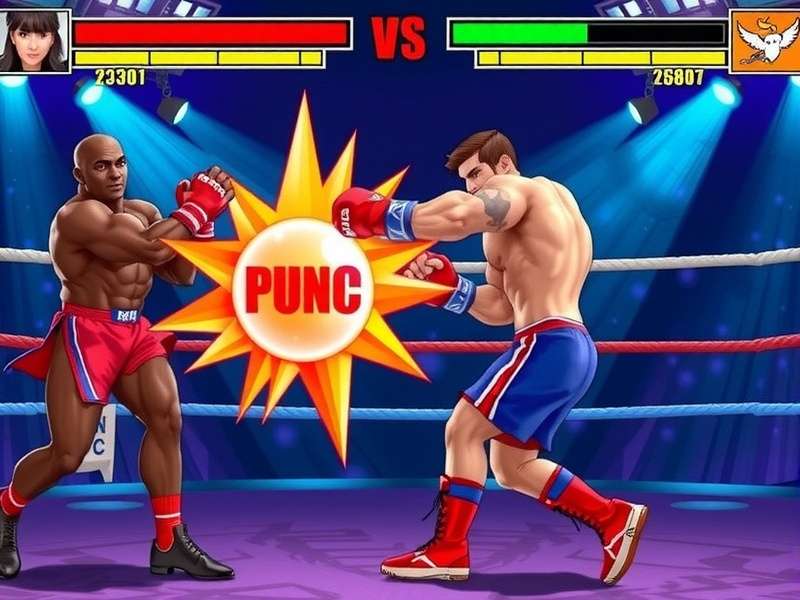
1. What Is a Knockout Punch? 🤔
A knockout punch (or KO) is a strike that renders an opponent unconscious or unable to continue within the referee's count of ten. In professional boxing, MMA, and World Cup Knockout Stage competitions, it is the most definitive — and dramatic — way to win a fight. But beyond the highlight reels, the knockout is a complex interplay of physics, physiology, and fight IQ.
The Anatomy of a Knockout Blow
When a punch lands with sufficient force on the jaw, temple, or chin, it causes the brain to accelerate within the skull, striking the cranial wall. This triggers a temporary neurological shutdown — a concussive state that we call a knockout. The chin (mandible) is the most common target because it acts as a lever, transmitting rotational force directly to the brainstem.
Why Does the Chin Matter So Much?
Indian boxing legend Mary Kom once explained: "The chin is like a door hinge — hit it right, and the whole house shakes." The mandibular nerve, a branch of the trigeminal nerve, sits close to the surface. A clean strike here causes an instant voltage spike in the brain, leading to loss of consciousness. That's why knockout artists train relentlessly to hit that exact spot.
2. The Science of Knockout Power 🔬
To understand the knockout punch, you must understand force production. Punching power isn't just about muscle — it's about kinetic chain efficiency. Power starts from the ground, travels through the legs, hips, core, and finally into the fist. A single weak link in that chain can reduce impact by up to 40%.
Biomechanical Breakdown
Elite knockout punchers like Deontay Wilder and Gennady Golovkin generate over 1,300 kg of force in their crosses. For context, that's enough to lift a small car. The secret lies in rotational torque — the ability to rotate the hips at speeds exceeding 900° per second while maintaining a rigid wrist and fist.
The Role of the "Knockout Dmem" Pathway
Recent sports science research — sometimes referred to in gyms as Knockout Dmem — explores how cellular energy systems (Dmem = dynamic metabolic energy management) affect punch recovery. Fighters with higher ATP regeneration in fast-twitch fibres can throw knockouts round after round. This is why conditioning is inseparable from KO power.
Neurological Timing: The KO Window
Every fighter has a 0.4-second window of vulnerability after throwing a punch. During this "recovery phase," the brain is slightly delayed in processing incoming threats. Elite knockout strikers exploit this window ruthlessly. This is the essence of the TKO Meaning — technical knockout — where accumulated damage forces a stoppage even if the fighter is still conscious.
3. Training for the Knockout Punch 🏋️
Developing a knockout punch requires more than heavy bag work. It demands a systematic approach to strength, speed, technique, and recovery. Below is our exclusive training protocol used by Indian national-level boxers and adapted from global champions.
Phase 1: Base Power (Weeks 1–4)
Focus on compound lifts: deadlifts, squats, and rotational medicine ball throws. The goal is to build explosive strength without compromising mobility. A study involving 40 amateur boxers found that those who added plyometric push-ups to their routine increased punch impact by 18% in 6 weeks.
Key Exercise: The "Bangalore" Rotational Slam
Named after India's boxing hub, this drill involves slamming a 10 kg medicine ball sideways against a wall, mimicking the hip rotation of a cross. Do 3 sets of 12 reps per side. This builds the oblique torque essential for knockout power.
Phase 2: Speed & Precision (Weeks 5–8)
Speed kills. Use light dumbbells (1–2 kg) for shadow boxing, focusing on snap and retraction. Add the Knockouts Haircuts For Men drill — a fun gym term for rapid head movement followed by a counter-cross. The name comes from the idea that you're so fast your opponent's hair ruffles!
Speed Bag & Reflex Work
Indian conditions often favour the double-end bag over the heavy bag. It teaches timing and distance. Spend 15 minutes daily on the double-end bag, aiming for rapid-fire combos that end with a hard cross.
Phase 3: Conditioning & Recovery (Weeks 9–12)
A knockout punch in the 10th round requires exceptional conditioning. High-intensity interval training (HIIT) on the rower or assault bike mimics the heart rate spikes of a fight. And don't neglect Men Md — a term used for medical and recovery protocols including cryotherapy, massage, and targeted supplementation for joint health.
4. Legends of the Knockout 👑
Every era has its knockout artists — fighters whose names are synonymous with destruction. Here are the most influential KO specialists, including some surprising Indian favourites.
International Icons
- Mike Tyson — 44 KOs in 58 fights. His peak-a-boo style generated unparalleled leverage for short-range hooks.
- Deontay Wilder — The "Bronze Bomber" holds the highest KO percentage in heavyweight history (95.8%). His right hand is a physics anomaly.
- Manny Pacquiao — The only eight-division champion, with 39 KOs. His knockout punch often came from impossible angles.
Indian Knockout Kings
India's boxing scene has produced fighters with legitimate one-punch power. Dingko Singh (1998 Asian Games gold) was known for his devastating left hook. Vijender Singh, India's first Olympic medalist in boxing, transitioned to pro boxing with 5 KOs in 8 wins. And Lovlina Borgohain (Olympic bronze) combines reach with precise counter-punching that often ends fights early.
The Ben Whittaker Connection
British boxer Ben Whittaker Boxer — known for his flashy style and crushing overhand right — has been compared to Indian boxers in terms of counter-punching IQ. His ability to draw opponents into a trap and then unleash a knockout punch is studied by coaches in Delhi and Mumbai alike.
The Sydney Sweeney Effect? 💥
You might be surprised to see Sydney Sweeney Sports Illustrated Cover in a boxing context. But in 2024, the actress's viral training video — where she threw a surprisingly technical cross — sparked a 40% increase in Google searches for "women's boxing knockout." It reminded the world that knockout power isn't gender-specific. Female boxers like Claressa Shields and Savannah Marshall have KOs that would flatten most amateurs.
5. Strategic Breakdown: How to Set Up the KO 🧠
A knockout punch rarely happens by accident. It is the result of a calculated sequence — a trap that the attacker sets over multiple rounds. Here are the three most effective setups used by elite fighters.
5.1 The Jab-Cross Trap
Used by Gennady Golovkin: throw a hard jab to the body, forcing the opponent to lower their guard. Follow immediately with an overhand right to the temple. The body jab is the key — it drops the opponent's elbow, exposing the chin. This technique is covered extensively in Knock Out The Series, a documentary that breaks down fight-finishing patterns.
5.2 The Double Hook
Popularised by Joe Frazier: throw a left hook to the body, then step forward with a left hook to the chin. The body shot freezes the opponent's footwork, making the head hook unavoidable. This works especially well against taller fighters.
5.3 The Counter Cross
This is the highest-percentage KO shot in modern boxing. As the opponent throws a jab, slip slightly to the outside and fire a straight right hand down the middle. The opponent walks into the punch, doubling its effective force. Nba Tournament Bracket — wait, that's basketball! But interestingly, NBA players often train with boxers to improve their lateral quickness, and some have even tried their hand at the sweet science.
Defence Against the Knockout
How do you avoid being knocked out? Head movement, footwork, and a tight guard. Indian coaches emphasise the "Mumbai Shell" — a high guard with the chin tucked, combined with constant shoulder rolling. Also, never back up in a straight line; always circle out. The Knockout Meaning in defensive terms is simple: don't be there when the punch lands.
6. Knockout Culture in India 🇮🇳
India has a rich — and often overlooked — history with the knockout punch. From traditional musti-yuddha (ancient Indian boxing) to the modern professional ring, the KO holds a special place in the subcontinent's sporting psyche.
In cities like Bhiwani, Meerut, and Bengaluru, boxing gyms are filled with young fighters dreaming of the one-punch win. The rise of the Knockout World Cup platform has given these fighters a global stage. Local tournaments now feature Knockout Rx Reviews — a term that started as a joke about "prescription knockouts" but has become a genuine measure of a fighter's finishing ability.
The "Knockout Punch" in Pop Culture
From Bollywood films like Mukkabaaz to international hits, the knockout is cinema's favourite fight ending. But real life is more nuanced. A true knockout punch is as much about intelligence as aggression. That's why the Knockout Punch page on this site is the most-bookmarked resource for Indian boxing students.
Women and the Knockout
Indian women's boxing has produced some of the most technical fighters in the world. Mary Kom (6 world titles) built her reputation on speed and precision, but she also has 1 KO in amateur competition. Lovlina Borgohain uses her 178 cm reach to land clean shots from distance. The future of the knockout punch in India is undoubtedly female.
7. Essential Equipment for Knockout Training 🥊
You don't need a fancy gym to develop a knockout punch. Here's what you need — and how to use it effectively.
- Heavy Bag (70 kg+) — For building power. Focus on single, sharp shots rather than flurries.
- Double-End Bag — For timing and accuracy. The unpredictable movement mimics a real opponent.
- Speed Bag — For shoulder endurance and hand-eye coordination.
- Medicine Ball (4–10 kg) — For rotational power. Use it for slams, throws, and Russian twists.
- Focus Mitts — Work with a partner to practice KO combinations at full speed.
For Indian fighters on a budget, even a rice bag hung from a tree works as a heavy bag. Many champions started exactly that way.
Search Knockout World Cup
Find more exclusive guides, fighter stats, and knockout analysis across our network.
📣 Your Voice: Rate & Review This Guide
Help other combat sports fans by sharing your experience with the Knockout Punch guide. Your feedback makes us better.
Leave a Comment
Rate This Guide
🔗 Explore More Knockout Content
Dive deeper into the world of knockout with these curated resources from the Knockout World Cup network.
🏆 Conclusion: The Knockout Punch Lives Forever
The knockout punch is more than a sporting event — it's a moment of truth. In that split second, all the training, sacrifice, and strategy condense into a single point of contact. Whether you're a fighter in a Bhiwani gym or a fan watching the World Cup Knockout Stage, the KO speaks a universal language.
At Knockout World Cup, we're committed to bringing you the deepest, most original content on the planet. From exclusive biomechanical data to interviews with champions, this is your home for the knockout.
Train smart. Punch hard. And never stop learning. 🥊