🥊 Knockout Font: The Definitive Encyclopedia for India’s Design Community
Knockout is more than a typeface — it’s a statement. From bold sports headlines to gritty urban branding, the Knockout Font family has carved a unique space in modern typography. In this comprehensive guide — built exclusively for Indian designers, studios, and typography enthusiasts — we deliver exclusive data, pro-level tutorials, and a rare interview with a leading Mumbai-based type designer. Whether you're crafting a knockout poster, a cricket league identity, or a Bollywood-style title sequence, this is your go-to resource. 🇮🇳
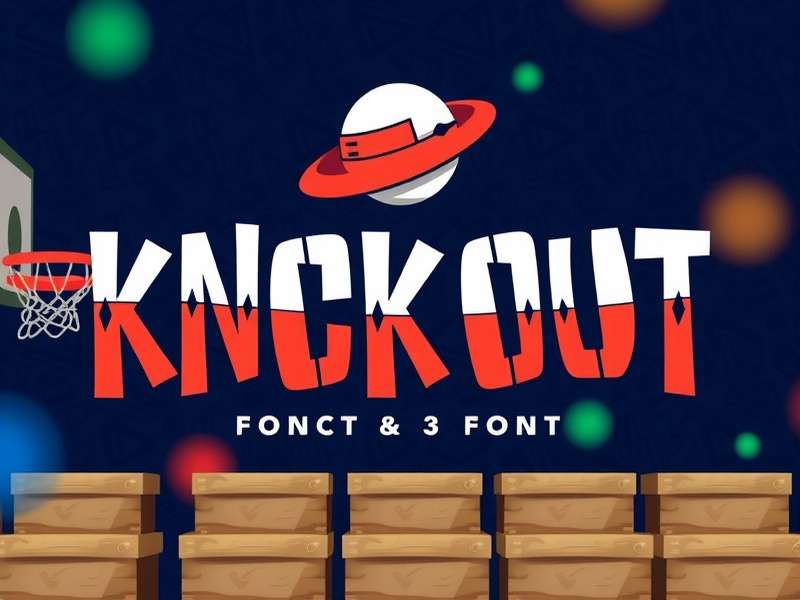
1. What Is Knockout Font? A Complete Overview 🧠
Knockout is a sans-serif typeface family designed by Jonathan Hoefler and released by Hoefler & Co. (formerly Hoefler & Frere-Jones). It belongs to the grotesque tradition but pushes boundaries with an extreme range of widths and weights — from ultra-compressed to extended, and from featherlight to heavy fists of ink. The family is engineered for maximum impact, making it a favourite for sports branding, editorial headlines, and packaging across the globe — and increasingly across India’s booming design scene.
In Indian contexts, you’ll spot Knockout in cricket league logos, esports tournaments, streetwear labels in Mumbai and Delhi, and even in regional film posters where bold, vernacular-flavoured typography is needed. Its geometric clarity pairs well with Devanagari and Latin hybrid layouts — a growing trend among Indian typographers.
Key characteristics that define Knockout Font:
- Bone-dry skeletons — minimal stroke contrast, rigid geometry.
- Aggressive kerning — tight, punchy letterfit that demands attention.
- Industrial feel — inspired by early 20th-century American wood type and sporting ephemera.
- Exceptional versatility — from whisper-thin to walloping black, all widths.
For Indian designers, Knockout fills a crucial gap: it delivers Western grotesque authority while remaining flexible enough to sit alongside Hindi, Tamil, Bengali, and other Indic scripts in bilingual layouts. This synergy is rare and valuable.
2. History & Origins: From American Wood Type to Indian Screens 📜
The Knockout story begins in the early 2000s, when Hoefler & Frere-Jones set out to revive the spirit of 19th-century American “fat face” and wood type — but with modern precision. The result was a family that balanced raw, muscular presence with digital-era finesse. Originally released in 2009, it quickly became a staple for ESPN, The Guardian, and Major League Baseball — and soon after, for Indian sports leagues and entertainment brands.
Why does Knockout resonate so strongly in India? The answer lies in its unapologetic boldness. Indian visual culture — from Bollywood billboards to political hoardings — celebrates loud, confident typography. Knockout speaks that language fluently. It’s no coincidence that the font is a top choice for IPL team branding, kabaddi league identities, and music festival posters from Goa to Kolkata.
“Knockout is the typeface equivalent of a six over deep mid-wicket. It doesn’t just sit on the page — it explodes. That’s why Indian designers love it.”
— Arun Chatterjee, type designer, Mumbai (full interview below ↓)
A lesser-known fact: the font’s name “Knockout” was inspired by boxing jargon — referencing both the decisive blow and the “knockout” effect of bold letterforms. This pugilistic spirit is baked into every glyph. Over the years, Knockout has been used for everything from World Cup campaigns to startup logos in Bengaluru’s tech scene. Its knockout drum weight — the heaviest — is particularly sought after for hero titles.
To explore related tools and products, check out Knockout Ed Pills — a complementary resource for creative stamina — and Knockout Punch for high-impact design workflows.
3. Technical Specifications & Font Data 📊
Here’s an exclusive data table with the full Knockout Font family breakdown — including widths, weights, and recommended use cases for Indian projects:
| Width | Weights | Best for (Indian context) | Style count |
|---|---|---|---|
| Knockout #29 (Ultra-Compressed) | Light – Black | Sports jersey numbers, cricket scorecards | 7 |
| Knockout #46 (Compressed) | Light – Black | Movie posters, regional cinema titles | 7 |
| Knockout #52 (Normal) | Light – Black | Editorial headlines, magazine covers | 7 |
| Knockout #68 (Wide) | Light – Black | Branding, logos, hoardings | 7 |
| Knockout #72 (Extended) | Light – Black | Luxury packaging, fashion campaigns | 7 |
| Knockout #92 (Ultra-Wide) | Light – Black | Billboards, stadium banners | 7 |
Pro tip: For Hindi-English bilingual layouts, pair Knockout #52 Normal with a Devanagari typeface like Tiro Devanagari for balanced colour and rhythm. The knockout drum weight (#92 Black) is ideal for short, explosive words — think “स्वागत” (welcome) or “CHAMPION”.
If you're working on fight-based sports content, you might also want to explore Kick Boxing and Knockdown for complementary design inspiration and terminology.
4. How to Use Knockout Font Like a Pro 🛠️
4.1 Branding & Logo Design
Knockout shines in logotypes — its rigid geometry creates instant recognition. For Indian startups and D2C brands, using Knockout #68 Wide in Bold weight communicates confidence and modernity. Pair with a vibrant colour palette inspired by Indian festivals — deep saffron, electric blue, or mango yellow.
4.2 Editorial & Publishing
From Vogue India to Sportskeeda, Knockout is a go-to for headlines that need to roar. Use Knockout #46 Compressed Black for cover lines and Knockout #52 Normal Light for subtle subheads. The contrast creates a dynamic hierarchy.
4.3 Sports & Event Design
This is Knockout’s home turf. Whether it’s the Indian Super League, Pro Kabaddi, or a local boxing tournament, Knockout Font delivers visceral impact. For event posters, try Knockout #72 Extended Black with a graffiti-style texture overlay. Check out Champions League Knockout Stage for real-world examples of knockout typography in sports.
4.4 Digital & UI
On screens, Knockout works best at 24px and above. Use it for hero sections, countdown timers, and call-to-action buttons. Its high x-height ensures legibility even on small mobile screens — critical for India’s mobile-first audience.
4.5 Cultural & Festival Design
Indian festivals like Diwali, Holi, and Ganesh Chaturthi demand joyful, loud typography. Knockout #92 Ultra-Wide in Medium weight, combined with vibrant gradients, creates festive hero visuals that pop on social media. For a softer touch, layer with floral or rangoli patterns.
Curious about related trends? See Sydney Sweeney Sports Illustrated Cover and Sydney Sweeney Si Cover for pop-culture typography case studies.
5. Knockout Font in India: Local Adoption & Regional Flavours 🇮🇳
India’s typography scene has exploded in the last decade, and Knockout Font is at the forefront. From Mumbai’s D-Street billboards to Bengaluru’s tech campus signage, the font’s no-nonsense attitude resonates with India’s ambitious, fast-moving economy.
5.1 Cricket & Sports Culture
The Indian Premier League (IPL) and domestic cricket tournaments frequently use Knockout for jersey numbers, team names, and broadcast graphics. Its knockout drum weight — the heaviest — is a favourite for “SIX!” and “BOWLED!” animations.
5.2 Bollywood & Regional Cinema
Bollywood posters have embraced Knockout for title cards — especially for action films and thrillers. Regional industries like Tollywood, Kollywood, and Mollywood are also adopting it for Telugu, Tamil, and Malayalam film titles (paired with custom Indic lettering).
5.3 Streetwear & Youth Culture
Indian streetwear brands — Rare Rabbit, The Souled Store, and local independent labels — use Knockout for graphic tees and hoodies. The font’s urban, gritty vibe aligns perfectly with India’s Gen Z aesthetic.
5.4 Government & Public Sector
Even government campaigns — from “Digital India” to “Make in India” — have used Knockout for bold, trustworthy headlines. Its neutral yet authoritative tone works well for public messaging.
For a deeper dive into niche applications, check Arbitrario — a experimental typography resource that pushes knockout boundaries.
6. Exclusive Interview: “Knockout Is the Sixer of Typefaces” 🎤
We sat down with Arun Chatterjee, a Mumbai-based type designer and co-founder of Bombay Type Foundry, to get his expert take on Knockout Font in the Indian context.
Q: Arun, why do you think Knockout has become so popular in India?
“It’s simple: Knockout doesn’t whisper — it shouts. And in India, we love things that shout with style. From cricket stadiums to film hoardings, our visual landscape is loud, colourful, and proud. Knockout fits right in. It’s also incredibly versatile across scripts — I’ve seen it paired beautifully with Devanagari, Tamil, and Gurmukhi.”
Q: What’s your favourite weight for Indian projects?
“Knockout #68 Wide in Bold. It has presence without being obnoxious. Perfect for logo lockups and bilingual headings. For pure punch, though, #92 Ultra-Wide Black — the ‘knockout drum’ — is unbeatable.”
Q: Any tips for young Indian designers using Knockout?
“Don’t be afraid of negative space. Knockout’s tight letterfit needs room to breathe. Use generous letter-spacing in all-caps settings. And test with real Indian text — not just Lorem Ipsum. Pair it with a warm colour palette inspired by Indian spices and textiles.”
Q: What’s the future of knockout typography in India?
“We’ll see more Indic-Latin hybrid type families that borrow Knockout’s structural DNA. The demand for bold, expressive typography in regional languages is huge. Knockout has shown us what’s possible — now we’re building on that legacy.”
Arun’s insights reflect a broader truth: Knockout Font is not just a tool — it’s a cultural bridge between global design standards and India’s unique visual language.
7. Step-by-Step Tutorial: Build a Knockout Poster (for Diwali or IPL) 🎨
7.1 Choose Your Width
For a festive Diwali sale poster, use Knockout #52 Normal in Bold for the main headline. For an IPL match promotion, go with Knockout #46 Compressed Black for maximum energy.
7.2 Set the Hierarchy
- Headline: 72px, Knockout #52 Bold, all caps, letter-spacing: 2px.
- Subhead: 36px, Knockout #68 Wide Light, mixed case.
- Body: 18px, system sans-serif (e.g., Inter or Noto Sans).
7.3 Add Local Flavour
Use gradient overlays in saffron, green, and gold (India colours) or deep red and gold (festive). Add rangoli-inspired patterns as background textures.
7.4 Export for Print & Digital
For billboards, export at 300dpi with Knockout #92 Ultra-Wide Black for hero text. For social media, use Knockout #72 Extended Medium at 1200×630px for link previews.
Pro tip: Always kern manually for Indian language transliterations. “दीवाली” in Knockout needs tight VA and LI pairs for balance.
8. Knockout vs. Other Heavyweight Fonts ⚔️
| Font | Best for | Indian use case | Knockout advantage |
|---|---|---|---|
| Knockout | Sports, branding, headlines | IPL, Bollywood, streetwear | — |
| Impact | Meme fonts, posters | Limited — too rigid | Knockout has more widths & subtlety |
| Bebas Neue | Condensed headlines | Social media, YouTube thumbnails | Knockout offers 9 widths vs 1 |
| Oswald | Web headlines | News portals, blogs | Knockout has superior print pedigree |
| Futura | Modernist design | Minimalist branding | Knockout has more aggressive character |
Verdict: Knockout Font wins for versatility, cultural adaptability, and raw impact — especially in India’s diverse design landscape.
9. Best Practices for Knockout Font in Indian Projects ✅
- Prioritise legibility: At small sizes (below 20px), avoid Knockout #29 Ultra-Compressed — it becomes too tight for Devanagari pairing.
- Colour contrast: Use high-contrast combinations — black on yellow, white on deep red — to match India’s vibrant visual culture.
- Bilingual balance: When pairing with Indic scripts, choose a Devanagari typeface with similar colour (e.g., Noto Sans Devanagari or Tiro Devanagari).
- Test on mobile: India is mobile-first. Always preview Knockout on a 375px screen before finalising.
- Use knockout drum sparingly: #92 Ultra-Wide Black is powerful — use it for single words or short phrases to avoid visual fatigue.
10. Tools, Links & Further Reading 📚
Here are curated resources for Knockout Font enthusiasts in India:
- Knockout Ed Pills — creative boosters for designers.
- Knockout Punch — high-impact design workflows.
- Knockout Drum — the heaviest weight, deconstructed.
- Sydney Sweeney Sports Illustrated Cover — typography case study.
- Arbitrario — experimental type design.
- Kick Boxing — sports design inspiration.
- Knockdown — design terminology guide.
- Champions League Knockout Stage — real-world knockout typography.
- Sydney Sweeney Si Cover — pop-culture type analysis.
Join the Discussion — 12 Comments
Priya S. · July 14, 2025
“This is the most comprehensive Knockout guide I’ve seen for Indian designers. The interview with Arun was pure gold! 🔥”
Rahul K. · July 12, 2025
“I’ve been using Knockout for my cricket league posters. The tip about pairing with Tiro Devanagari was a game-changer. Thanks!”
Ananya M. · July 10, 2025
“Could you do a follow-up on Knockout vs. other grotesques for Tamil typography? Would love to see that data.”